
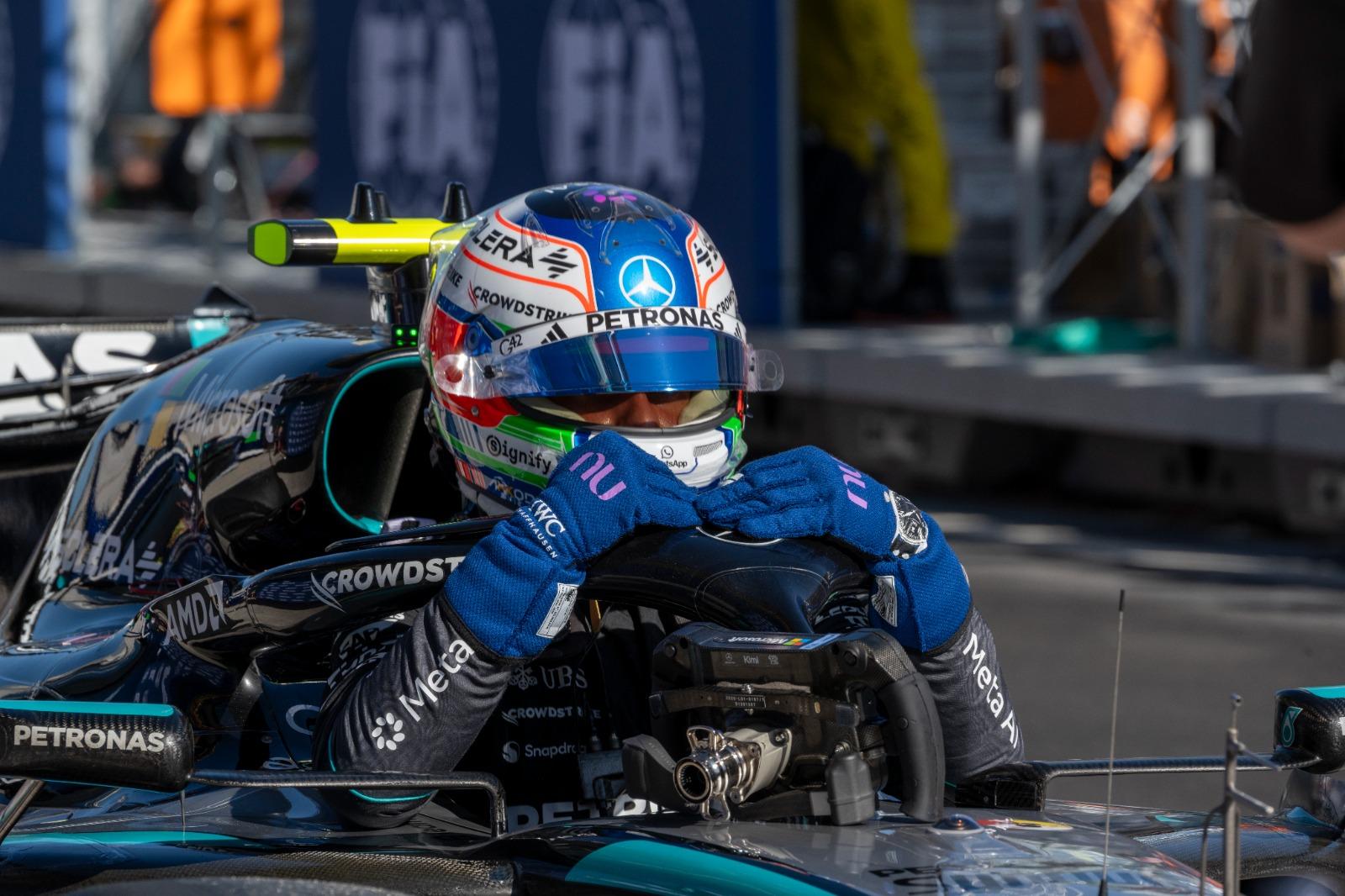
Kimi Antonelli Takes Madrid and Opens a Huge Championship Gap
What happens when speed, patience and a little bit of luck come together on a Formula 1 Sunday? In Madrid, Kimi Antonelli found the answer.
The 20-year-old Mercedes driver claimed victory at the Spanish Grand Prix on the new Circuito de Madring, turning a complicated race into another major step towards his first Formula 1 world championship.
Antonelli did not have everything go his way from the opening lap. Lando Norris started from pole position and initially controlled the race, while Antonelli and Max Verstappen both had moments off the racing line that cost them positions. But Formula 1 is rarely decided by the first few laps. Strategy, timing and circumstances can completely change the picture.
That is exactly what happened.
A Virtual Safety Car , triggered after Lance Stroll hit the barriers on lap 14, created a crucial opportunity for drivers who had not yet stopped. A Virtual Safety Car slows the entire field without physically bringing the safety car onto the circuit. Because cars are moving more slowly, a pit stop during this period can be considerably less costly in terms of lost track position.
Antonelli and Verstappen benefited. Norris did not.
The McLaren driver later suffered another setback when his pit stop under normal racing conditions was slower than expected. Within a short period, the driver who had started first found himself fighting from behind.
Antonelli, meanwhile, stayed composed and took control.
Behind him, Verstappen eventually finished second, while Norris recovered to third. Charles Leclerc completed an unusual Ferrari strategy in fourth, after spending a long period on worn tyres before finally stopping on lap 49.
The result was particularly important for the championship.
Antonelli collected the maximum 25 points, while Mercedes teammate George Russell finished fifth and added 10. That increased Antonelli's advantage over Russell from 66 points to 81, with nine races still remaining.
It is a remarkable position for a driver who is only in his second F1 season.
There is also a bigger story developing. With Mercedes currently producing the strongest package of the new era, Antonelli has repeatedly shown that he can turn competitive machinery into results. His consistency is beginning to look just as important as his raw speed.
Yet the young Italian is refusing to talk too much about the championship.
His message after the race was simple: keep racing, keep improving and take the season one weekend at a time.
That approach may be important. A large championship lead can create pressure, but it can also tempt a driver to become conservative. Antonelli appears determined to do the opposite.
Madrid also demonstrated how difficult overtaking could be on the new 22-corner circuit. The track combines slow, technical sections with faster stretches, but following another car closely did not always translate into an easy passing opportunity.
Norris experienced that problem directly while chasing Verstappen in the closing stages. He got close several times but could not complete the move.
For Norris, the victory had slipped away through circumstances largely outside his control.
For Antonelli, those same circumstances became an opportunity.
And that is one of Formula 1's most important lessons: winning is not always about being the fastest driver on every lap. It is also about being ready when the race suddenly changes.
In Madrid, Antonelli was ready.
Now, with an 81-point cushion, the question is no longer whether he belongs in the championship fight.
It is whether anyone can stop him.
By Barbara Cardilli – Motorsport & Lifestyle Expert
Image credit to: @CBAimages